House with Christmas Lights and Moon Design Review
When evaluating a new digital asset for my studio, I look beyond the screen preview to imagine how the artwork will actually translate into thread. The House with Christmas Lights and Moon design immediately strikes me as a versatile contender for holiday collections. It captures that specific, cozy nostalgia that drives sales during the festive season without feeling overly chaotic or dated. As a designer who regularly produces both custom apparel and commercial embroidery projects, I see this motif as a strong candidate for sweatshirt embroidery and personalized gifts, provided it is executed with the right technical considerations.
Translating Digital Art to Stitched Reality
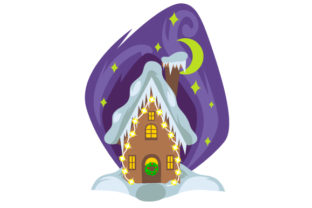
The first impression of this design is its balanced composition. The interplay between the structured geometry of the house and the organic curve of the moon creates a natural focal point. For an embroidery project, this balance is crucial. Designs that are too top-heavy or asymmetrical can cause hooping issues or fabric distortion, but this layout suggests a stable center of gravity. The inclusion of Christmas lights offers a fantastic opportunity for color variation, allowing makers to customize thread colors to match specific brand palettes or customer requests.
However, the transition from a vector-based SVG or EPS file to a stitched reality requires careful planning. While the provided formats (SVG, Transparent PNG, EPS, DXF) are excellent for printables, cutting machines, and digital mockups, they do not inherently contain stitch data. If you are using this as a base for a machine embroidery design, you must digitize it with intent. The lights should likely be rendered in satin stitch to mimic the glow of bulbs, while the house structure might benefit from a lighter fill stitch or running stitch to prevent excessive density. Over-digitizing this type of detailed scene is a common pitfall; keeping the stitch count reasonable ensures the final handmade product remains soft and wearable rather than stiff and bulletproof.
Real-World Application: The Holiday Sweatshirt Test
To truly judge the viability of the House with Christmas Lights and Moon, I mentally placed it on a heavyweight cotton fleece sweatshirt, which is currently the gold standard for Etsy sellers and small shop products. In this scenario, the design serves as more than just decoration; it acts as a mood setter. A 5x7 hoop size would allow the house and moon to be large enough to showcase detail without overwhelming the garment's chest area. This scale is ideal for boutique branding because it leaves room for optional personalization, such as a family name or year established below the main motif.
I also considered this design for a tote bag design intended for holiday markets. Canvas provides a stable foundation, but the texture can sometimes swallow fine details. Here, the bold shapes of the house and moon work in our favor. Unlike intricate lace patterns that disappear on textured fabrics, this graphic style maintains visual clarity. For craft business owners, this means the design reads well from a distance at a vendor booth, increasing buyer engagement. When creating printable mockups for your listings, use the transparent PNG version overlaid on a high-quality photo of a blank sweatshirt or bag to give customers a realistic expectation of the finished product.
Navigating Fabric Limitations and Hoop Constraints
While the aesthetic is universally appealing, practical application requires caution depending on the substrate. I would advise against using highly detailed versions of this design on stretchy knits or thin performance fabrics without significant stabilization. The combination of potential fill stitches for the house and satin stitches for the lights creates variable tension points. Without proper stabilizer, you risk puckering around the moon’s curve or the roofline, which diminishes the professional quality of the item.
Small hoop sizes present another challenge. If you attempt to shrink this design down for baby embroidery or cap placement, the Christmas lights may become indistinguishable blobs of thread. In these cases, simplification is key. You might need to edit the design assets to remove individual light bulbs or simplify the window panes to maintain stitching clarity. Always test the design on scrap fabric first, especially when working with dark fabrics where thread contrast is paramount. White or metallic threads for the lights against a navy or forest green background can create stunning depth, but only if the underlay is sufficient to prevent the fabric color from bleeding through.
Commercial Viability and Product Value
For creative entrepreneurs and digital product sellers, the value of this design extends beyond a single stitched item. The inclusion of DXF and EPS files makes it compatible with laser cutters and vinyl plotters, allowing for mixed-media projects. Imagine offering a matching set: an embroidered patch featuring the House with Christmas Lights and Moon alongside a vinyl-decaled ornament using the same artwork. This consistency builds brand recognition and increases the perceived value of your holiday collection.
From a licensing and commercial embroidery perspective, always verify the specific terms attached to your download. Just because a file is available does not automatically grant permission to sell the digitized embroidery file itself versus selling the finished physical product. Respecting intellectual property protects your business reputation. Assuming you have the appropriate rights, this design has high giftability. It fits seamlessly into nursery decor as a framed hoop art piece or serves as a charming accent on kitchen towels. Its broad appeal makes it a safer bet for inventory production compared to niche humor designs that might alienate some buyers.
Designer Notes for Successful Execution
Before loading this design into your machine or listing it in your shop, run through this practical checklist to ensure professional results:
- Verify File Compatibility: Confirm whether the download includes actual embroidery machine formats (like PES, DST, JEF) or if you are receiving only vector/image files for digitizing or printing. Do not assume stitch data exists in an SVG or PNG.
- Contrast Check: Test thread colors against your chosen fabric in natural lighting. The moon and lights must stand out clearly; low-contrast combinations will make the design look muddy in photos and in person.
- Density Audit: If digitizing from scratch, aim for varied textures. Use running stitches for outlines and lighter fills for large areas to keep the sweatshirt embroidery comfortable.
- Stabilizer Selection: Match your stabilizer to the fabric weight. Cut-away for stretchy apparel, tear-away for stable woven goods like tea towels, and water-soluble toppings for high-pile fabrics to keep stitches visible.
- Mockup Accuracy: When using the transparent PNG for Etsy listings, apply a slight texture overlay or shadow effect so the design doesn't look like a flat sticker. Customers trust sellers who show realistic representations.
- Wash Testing: If producing items for frequent washing like baby clothes or aprons, wash-test your sample. Ensure the satin stitches on the lights don't snag or unravel after laundering.
The House with Christmas Lights and Moon is a delightful addition to any maker's library, bridging the gap between traditional holiday warmth and modern crafting versatility. Whether you are creating a custom apparel line, stocking up for a winter craft fair, or designing digital assets for other creators, success lies in respecting the technical limits of your medium. By approaching this design with a critical eye toward stitch density, fabric choice, and end-use functionality, you transform a simple digital file into a cherished, tangible product that resonates with customers and showcases your craftsmanship.